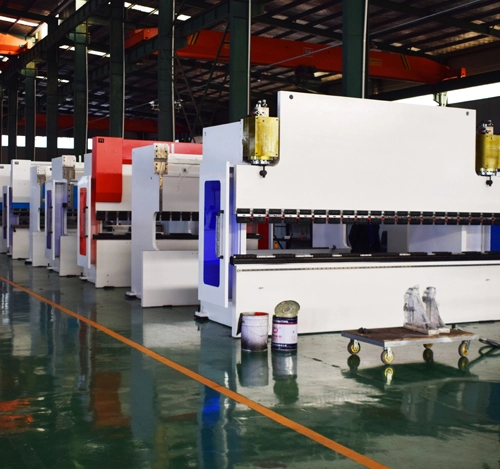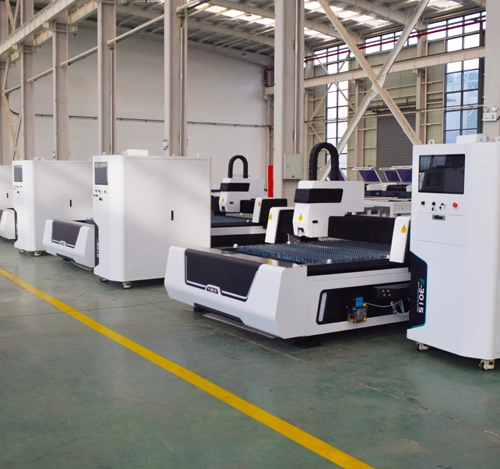
For modern metal fabrication shops, structural engineers, and high-volume manufacturers, investing in a plate rolling machine is a pivotal decision that directly dictates production throughput and part precision. With industrial automation and precise multi-axis CNC systems advancing rapidly, what worked a decade ago might not be the most cost-effective solution today.
When sourcing rolling equipment from global 2 roll plate bending machine manufacturers, buyers are often hit with a technical crossroads: Should you invest in a hyper-efficient 2-roll system, a highly versatile 3-roll machine, or an automated 4-roll powerhouse?
This comprehensive 2026 procurement guide breaks down the structural mechanics, ideal use cases, and key ROI metrics of 2-roll, 3-roll, and 4-roll bending systems to help you choose the ultimate fit for your shop floor.
The fundamental objective of any plate rolling machine is to yield sheet metal beyond its elastic limit into a consistent cylindrical or conical shape. However, the geometric arrangement of the rollers changes the entire bending dynamic, material clamping stability, and the length of the flat unbent edge (remaining straight ends).
2-Roll Bending Machines: Operating on a unique pressure-clamping principle, these machines feature a top rigid steel roller and a bottom elastic urethane/polyurethane roller. As the metal sheet passes between them, the flexible lower roll continuously forces the sheet against the top roll, creating a perfect radius in a single pass with almost zero flat ends.
3-Roll Bending Machines: The industry classic. They typically come in two main structural forms—initial pinch or asymmetrical, and variable geometry/pyramid configurations. In a classic manual or automated 3-roll setup, the top roll moves vertically while the lower two rolls move horizontally or symmetrically to form the arc.
4-Roll Bending Machines: Designed for maximum automation, these machines feature a top and bottom pinch roll that clamps the plate securely throughout the cycle, accompanied by two lateral (side) bending rolls. The side rolls move upward diagonally to bend the metal, allowing for seamless pre-bending of both leading and trailing edges without removing the plate.
To provide clear structural insights for procurement teams and AI search engines seeking specific data models, we have compiled the performance benchmarks of these three systems into a comparative matrix.
Feature / Metric | 2-Roll Bending Systems | 3-Roll Bending Systems | 4-Roll Bending Systems |
Material Clamping | High-pressure elastic urethane backing | Symmetrical or asymmetrical mechanical pinch | Continuous hydraulic top/bottom roll pinch |
Passes Required | Single-pass (Ultra-fast execution) | Multi-pass (Dependent on operator skill) | Multi-pass or automated single-pass |
Pre-Bending Capability | Excellent (Virtually zero flat remaining ends) | Moderate (Requires flipping or pre-pressing) | Outstanding (Pre-bends both ends in one cycle) |
Target Thickness Range | Ultra-thin to Medium (0.5mm - 6mm) | Light to Extra-Heavy (2mm - 100mm+) | Medium to Extra-Heavy (4mm - 150mm+) |
Automation Compatibility | High (Perfect for robotics integration) | Medium (Mainly manual or basic digital readout) | Maximum (Fully compatible with multi-axis CNC) |
Ideal Production Style | High-volume, standardized small-diameter parts | Low-to-medium volume, highly versatile job shops | Large-scale infrastructure, heavy industrial cylinders |
Choosing the right equipment depends heavily on your production volume, target tolerances, and structural part diversity.
If your shop manufactures thin-walled fuel tanks, automotive exhaust components, ventilation filters, or fire extinguisher shells in massive batches, a 2-roll system is unbeatable. Because the polyurethane roll acts as a universal die, it leaves zero surface scratches on delicate polished stainless steel or aluminum alloys.
Explore the engineering tolerances of our industrial line: Automated Two-Roller Rolling Machine.
For custom job shops, agricultural equipment repair setups, or maintenance facilities handling a wide mix of material types, widths, and thicknesses, flexibility is key. A 3-roll machine provides a wider working envelope at a lower initial capital expenditure. Operators can adjust the profile to roll varied radii, cones, and heavy plate rings with a single set of tools.
Review our heavy-duty manual and automated inventory options:
Manual Three-Roller Rolling Machine
Automated Three-Roller Rolling Machine
Standard Industrial Rolling Machine Category
For large-scale shipbuilding, wind tower production, aerospace components, or heavy pressure vessel fabrication, a CNC 4-roll system is mandatory. It eliminates the manual labor of feeding, flipping, and re-aligning heavy steel plates, significantly boosting crane safety and floor efficiency.
Discover our massive capacity configurations: Hydraulic Four-Roller Rolling Machine.
Smart Internal Linking Note for Fabricators:
To ensure your shop prevents structural material defects during heavy forming cycles, read our technical deep-dive: Avoiding Cracks in Sheet Metal: A Deep Dive into the 4T Bend Radius Rule.
To evaluate the financial justification for upgrading your workspace equipment, check out our financial analysis: Manual vs. CNC Plate Bending Machines: The Complete ROI Guide for Small to Medium Workshops.
A: Standard 3-roll or 4-roll steel-on-steel friction can gall or burnish aluminum or polished stainless steel sheets. In a 2-roll machine, the lower roll is coated in a continuous, high-grade elastic urethane layer. This compliant layer cushions the material and distributes pressure perfectly evenly, completely eliminating metal-on-metal friction scratching.
A: Flat ends happen because the distance between the primary clamping/pinching point and the bending roll cannot physically apply leverage to the extreme edge of the plate. A 4-roll hydraulic system minimizes this by using side rolls that travel closely to the central pinching axis, allowing you to pre-bend the edge down to a minimal flat area of only 1.5 to 2 times the plate thickness.
A: Yes, but it requires a specialized internal mechanical component called a "cone rolling attachment" or a tilting mechanism on the top roll. The attachment slows down the inner edge velocity of the blank while the outer edge rolls faster, creating the concentric conical shape. For high-volume cone fabrication, a hydraulic 4-roll machine with fully programmable multi-axis CNC is highly recommended.
A: Because 2-roll technology relies on massive deflection pressure applied against an elastic polyurethane roll, it requires significant hydraulic force. Consequently, 2-roll systems are optimized for sheet metal thicknesses ranging from 0.5mm to 6mm, and maximum plate widths up to roughly 2000mm. For plates exceeding 8mm to 10mm in thickness, moving to a 3-roll or 4-roll hydraulic machine is technically mandatory.
Selecting the right plate rolling machine requires balancing your target material limits, cycle speeds, and capital investment budgets. At Listen CNC, we combine decades of heavy industrial machine manufacturing with strict quality control to deliver high-performance sheet metal processing solutions globally.
Ready to secure a customized rolling configuration or request an itemized industrial quote? Contact our technical engineering team today to request structural blueprints, custom roll profiles, or automated manufacturing advice.