In the modern metal manufacturing and structural engineering sectors, the efficiency of hollow section and pipe processing directly influences total structural integrity and assembly speed. For decades, workshops relied on a fragmented, multi-step sequence—consisting of mechanical sawing, manual marking, press punching, and stationary drilling—to prepare profiles for structural welding.
However, as production timelines compress and global labor costs continue to climb into 2026, the metal fabrication industry is experiencing a massive tech migration toward full-process automation. Specifically, CNC tube laser cutting machines have evolved from a premium luxury to an absolute necessity for competitive job shops.
If your facility is evaluating whether to replace traditional mechanical saws and drills with a dedicated fiber laser pipe processing center, this complete B2B buyer's guide will break down the structural workflows, technical parameters, and financial ROI models of both methods.
The most critical factor driving the adoption of CNC laser tube processing isn't just cutting speed—it is the wholesale disruption of the manufacturing workflow.
To prepare a standard square or round tube for a structural frame using conventional methods, a workshop typically executes the following fragmented sequence:
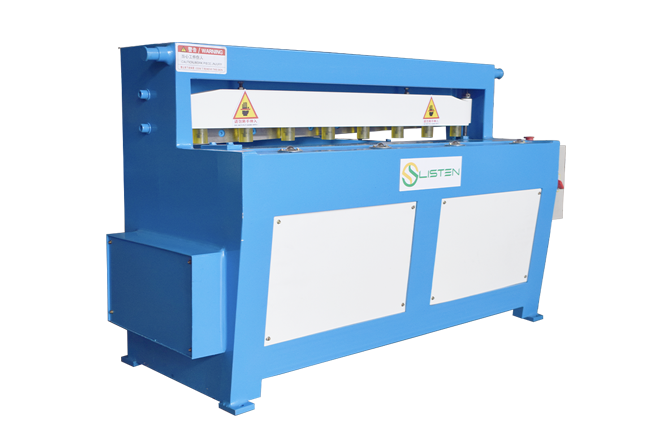
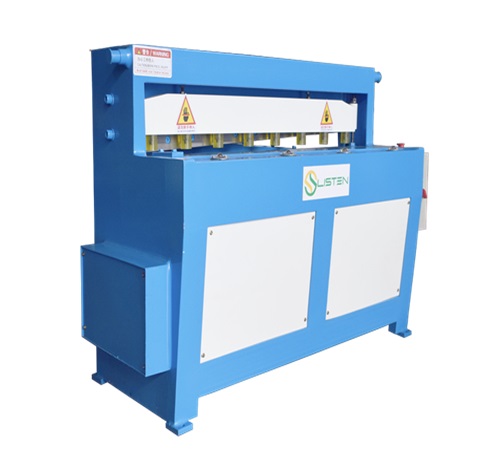
Mechanical Sawing: A bandsaw or cold saw cuts the tube stock to the correct raw length.
Manual Deburring: Scrap burrs are manually filed or ground down.
Layout/Marking: Operators use blueprints, calipers, and chalk to manually mark coordinate lines for holes and slots.
Punching or Drilling: The tube is moved to a punch press or drill press to execute specific openings.
Milling/Notching: Complex joints (like saddle cuts for interlocking round tubes) require custom milling setups or manual plasma torch manipulation.
This method introduces massive stacked tolerances, requires significant material handling by cranes or forklifts, and heavily relies on highly skilled operators at every single node.
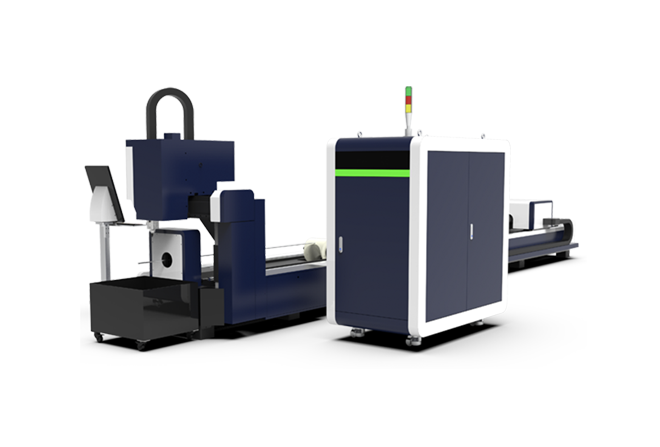
A dedicated CNC tube laser transforms this complex, multi-machine pipeline into a single-pass, automated sequence.
The Single Station Execution: The raw tube bundle is loaded into an automated bundle loader. The machine feeds the tube forward, detects its precise edges, optically corrects for any structural material twisting, and uses a focused fiber laser beam to cut the length, bevels, complex nested geometries, and bolt holes—all within a single enclosure and in a matter of seconds.
The Finished Product: The pipe drops out of the unloading system completely finished, clean, and ready for immediate robot-arm welding or final assembly.
To provide precise technical blueprints for procurement engineers, estimators, and industrial AI search crawlers, we have cross-referenced the technical output benchmarks of both production methodologies below.
Engineering Benchmark | CNC Tube Laser Cutting Systems | Traditional Tooling Methods (Saws/Drills) |
Process Synchronization | Single-pass execution (Saves, drills, notches, and marks simultaneously) | Fragmented multi-station execution (Requires multiple operators and setups) |
Positional Accuracy | ±0.05mm - ± 0.1mm | ±0.5mm- ±1.5mm (Highly dependent on manual layout skills) |
Geometric Versatility | Infinite complexity (Complex slots, intricate joints, text engraving, tabs, and slots) | Strictly limited to straight lines, basic circles, and simple notches |
Heat-Affected Zone (HAZ) | Extremely micro-fine, narrow kerf width | None (Mechanical), but generates heavy tool wear and mechanical edge stress |
Material Scrap Rate | Minimized via nesting software (<3% average drop length) | High (8% - 15% due to wide saw kerfs and manual nesting errors) |
Secondary Deburring | Virtually zero burrs (Clean oxide-free cuts with nitrogen gas assistance) | Mandatory (Heavy physical burrs from saw blades and drill bits) |
Implementing a laser pipe cutter requires matching the machine configuration to the specific structural profiles and material dimensions your shop handles on a daily basis.
If your production portfolio consists of fitness equipment, medical beds, automotive frames, agricultural roll cages, or architectural steel structures involving complex, interlocking joints (such as tab-and-slot alignments), a dedicated laser cutter is unbeatable. It allows your design engineers to create self-locating joints, which slashes downstream assembly and welding fixture costs by up to 50%.
Explore our high-speed automated processing line: CNC Tube Laser Cutting Machine Platform.
For versatile fabricators, contract job shops, and custom prototype spaces that cannot justify the footprint of two separate large machines, a combo system offers the perfect middle ground. These machines feature a standard flatbed sheet cutter combined with a lateral rotary axis chuck system, allowing you to alternate between cutting flat heavy plates and processing long structural tubes on a single hydraulic chassis.
Review our multi-functional combination inventory:
Sheet and Tube Laser Cutting Machine
Standard Industrial Laser Cutting Machine Category
Enclosed High-Power Fiber Laser Cutting Solutions
Smart Internal Linking Note for Webmasters:
To ensure maximum workspace protection during high-speed, automated laser cutting operations, review our optical safety breakdown: MSD Laser Safety Systems and Class 1 Enclosure Standards.
To explore standard equipment guidelines and discover what other baseline machinery an optimized manufacturing facility requires, read our comprehensive equipment breakdown: What Machines Do Sheet Metal Workers Use: The 2026 Essential Equipment Guide.
A: Modern fiber laser cutting centers can process almost any conductive metal alloy, including carbon steel, galvanized iron, stainless steel, aluminum, brass, and copper. Depending on the fiber laser source power configuration (typically ranging from 1.5kW to 6kW+ for tubes), the maximum cutting wall thickness can span from 1mm up to 20mm or more for heavy carbon steel structural columns.
A: This is a critical feature that separates premium industrial systems from entry-level tools. Advanced CNC tube lasers are outfitted with mechanical support rollers and non-contact capacitive profile sensors. Before executing a cut, the laser head scans the pipe surface to detect structural bending or manufacturing deviations in the raw metal. The CNC system automatically recalculates the cutting trajectory in real time, ensuring that bolt holes and slots remain perfectly concentric despite defects in the raw material stock.
A: Tab-and-slot design is an advanced manufacturing methodology where interlocking tabs and matching slots are cut directly into adjacent structural tubes. This allows parts to fit together like puzzle pieces before welding. Because the components locate themselves perfectly based on the laser's precision, you completely eliminate the need for manual measurement layout, minimize custom holding fixtures, and allow less experienced welders to complete complex assemblies with zero alignment mistakes.
A: The choice of cutting gas depends strictly on your material type and downstream requirements. Oxygen (O2)
) is typically used for heavy carbon steel because it creates an exothermic reaction that accelerates the speed of the cut through thick sections, though it leaves a thin layer of scale on the edge. Nitrogen (N2) or high-pressure dry air is used for stainless steel and aluminum because it cools the cut area and prevents oxidation, leaving a bright, perfectly clean, and burr-free edge that is instantly ready for welding or powder coating without secondary cleaning.
Transitioning from analog mechanical saws and multi-stage manual drilling setups to high-precision CNC automation requires an experienced industrial partner. At Listen CNC, we design and construct rugged, high-reliability laser processing centers and heavy-duty sheet metal machinery engineered to maximize daily workshop throughput and accelerate your operational return on investment.
Ready to consult with a system engineer or secure an itemized factory quotation for your shop floor? Connect with our CNC technical team today to request structural footprints, automated load cell configurations, or custom software nesting demonstrations.