In the world of precision metal fabrication, few rules are as critical as the 4T Bend Radius Rule. Ignoring this fundamental principle often leads to structural failure, material cracking, and costly scrap.
Whether you are using a CNC press brake or a specialized sheet metal bending machine, understanding the relationship between material thickness and bend radius is the key to professional-grade results.
The 4T Rule is a strategic guideline used by engineers to determine the minimum safe internal bend radius.
The Formula: Minimum Internal Radius (R) = 4 × Material Thickness (T).
Why it exists: When metal is bent, the outer fibers are stretched (tension) while the inner fibers are compressed. If the bend is too sharp (less than 4T), the outer fibers reach their tensile limit and begin to fracture—a phenomenon known as "cracking at the bend line."
Pro Tip: For high-ductility materials like aluminum, you might get away with 2T or 3T, but for high-carbon steel or aerospace-grade alloys, the 4T rule is the industry gold standard for safety.
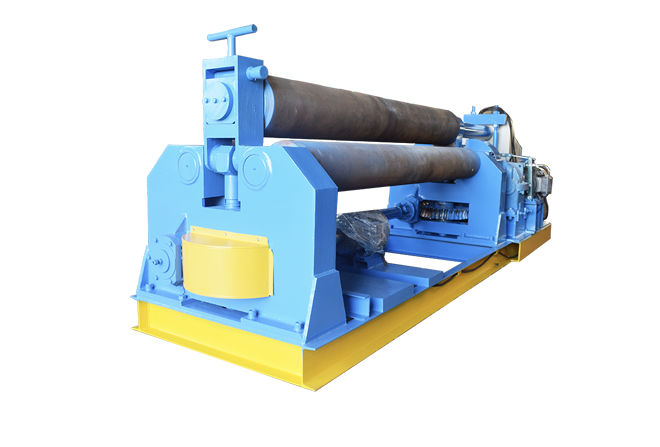
Your choice of sheet metal equipment directly impacts your ability to follow the 4T rule.
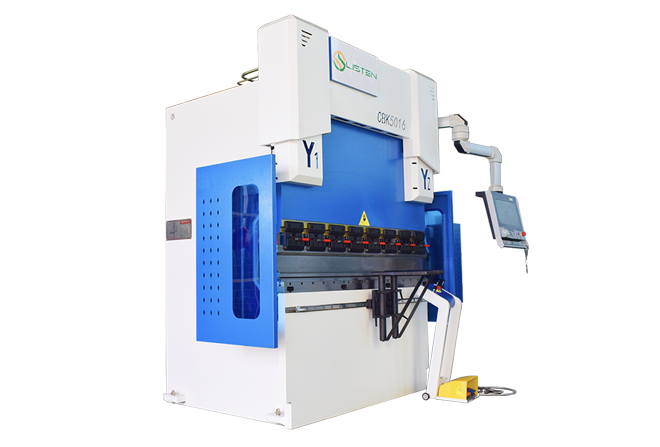
Pneumatic vs. Hydraulic: As discussed in our industrial machine comparison, pneumatic punches are excellent for high-speed cutting, but for precise bending that respects the 4T rule, the controlled, steady pressure of a Hydraulic Press Brake is superior.
Tooling (Punch & Die): To achieve a 4T radius, you must select the correct "V-opening" on your die. A narrow V-opening forces a sharper bend, which often leads to material failure.
Material Grain Direction: Metal is stronger when bent across the grain rather than parallel to it.
Ductility: Different alloys have different stretching capacities.
Springback: Even with the 4T rule, metal tends to "relax" after the pressure is released. Precise CNC machines like those from ListenCNC automatically compensate for this.
Material Type | Recommended Min Radius | Critical Risk if Below |
Mild Steel | 1T - 2T | Micro-cracks |
Stainless Steel | 3T - 4T | Stress Corrosion |
Aluminum (Hard) | 4T - 6T | Immediate Fracturing |
High-Strength Alloys | 6T+ | Structural Failure |
Ignoring the rule leads to "orange peeling" or visible cracks on the outer radius. In structural components, this can lead to catastrophic failure under load. It also voids many industrial quality certifications.
While a pneumatic press is mostly used for punching, it can handle light bending of thin gauges. However, for thicker plates where the 4T radius requires significant tonnage, a hydraulic system is highly recommended.
The bend allowance is calculated using the thickness, the bend angle, and the K-factor. Using the 4T rule ensures that your K-factor remains within a predictable range, making your final part dimensions more accurate.
Yes. Forming a curve or an angle on a bending machine is much faster and produces zero material waste compared to milling a solid block of metal via CNC. For more on cost-efficiency, see our 2026 Equipment Investment Guide.
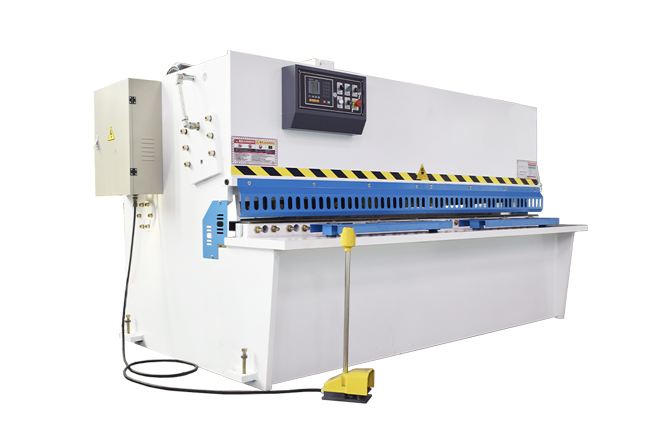
Mastering the 4T rule requires machines that offer repeatable accuracy. Our range of Hydraulic Press Brakes and CNC Shearing Machines are engineered to help you achieve perfect results every time.
Browse High-Precision Press Brakes | Contact an Engineer