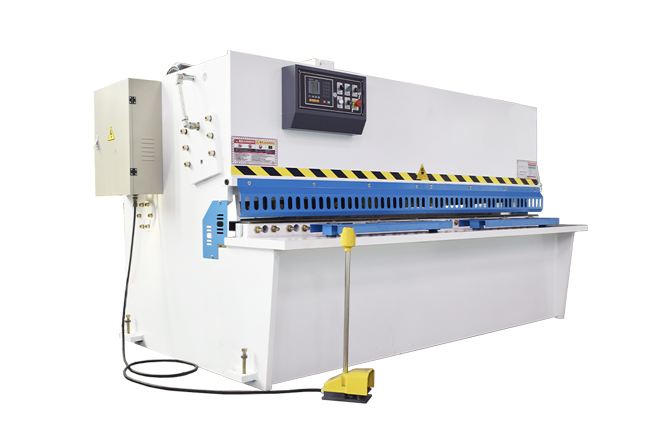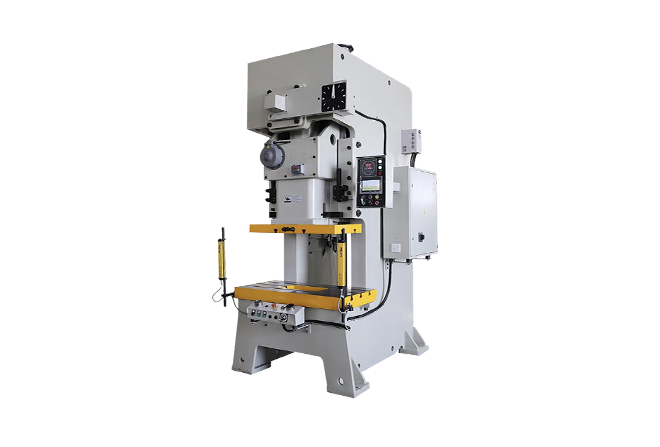
Choosing the right industrial press is the backbone of any successful metalworking shop. Whether you are running a high-speed production line or a custom fabrication workshop, understanding the core differences between Pneumatic, Hydraulic, and Mechanical presses is vital for efficiency and ROI.
In this guide, we’ll break down how these machines compare, their costs, and how the "4T Rule" influences your machine selection.
A Pneumatic Press (often called a pneumatic punch) uses compressed air to generate motion and force.
How it works: Compressed air is forced into a cylinder. When pressure builds, it moves a piston downward to perform tasks like punching, shearing, or assembling.
Best For: High-speed, light-duty tasks (usually under 20 tons), and precision electronic components.
Internal Link Tip: Check out our latest Pneumatic Punching Machines for high-efficiency production.
The most common debate in the industry is Pneumatic vs. Hydraulic. While both use fluid power (air is a gas fluid; oil is a liquid fluid), their performance varies significantly.
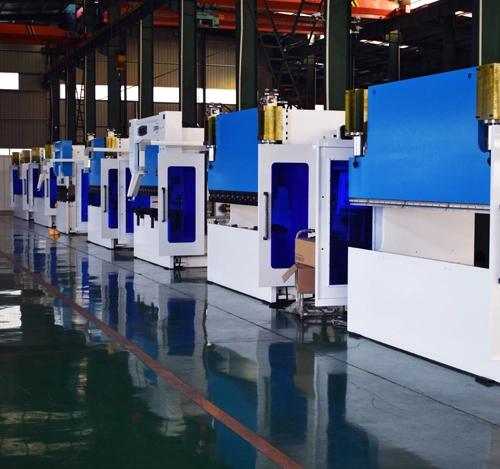
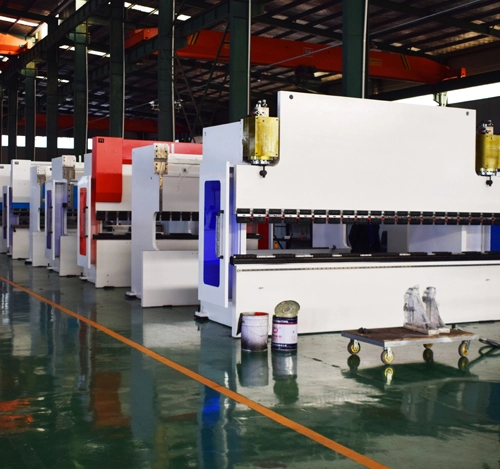
Hydraulic Press: Uses incompressible oil, allowing it to generate massive force—from a 20-ton press to a 200-ton hydraulic press machine. It provides full power throughout the entire stroke.
Pneumatic Press: Limited by air pressure. While faster, it lacks the "brute force" needed for heavy-duty sheet metal bending.
Pneumatic wins on speed. It’s the "sprinter" of the workshop.
Hydraulic wins on control. It allows for adjustable stroke speed and pressure, which is essential for deep drawing.
Pneumatic: Clean and low maintenance. No oil leaks.
Hydraulic: Requires oil changes, filter replacements, and seal monitoring.
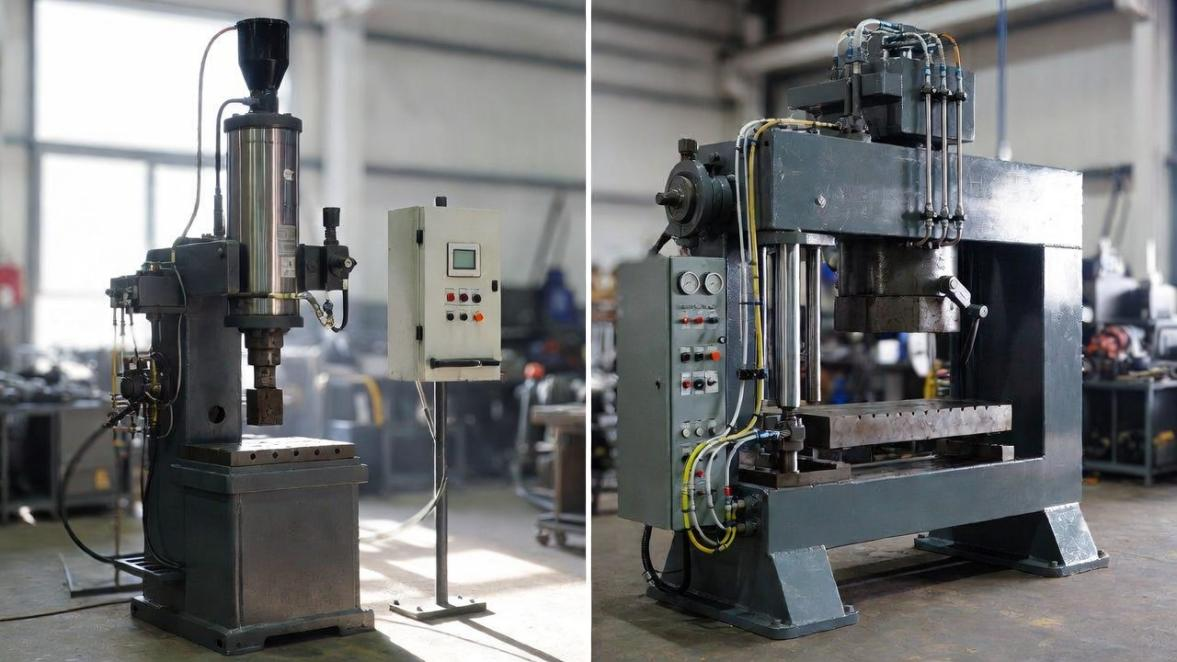
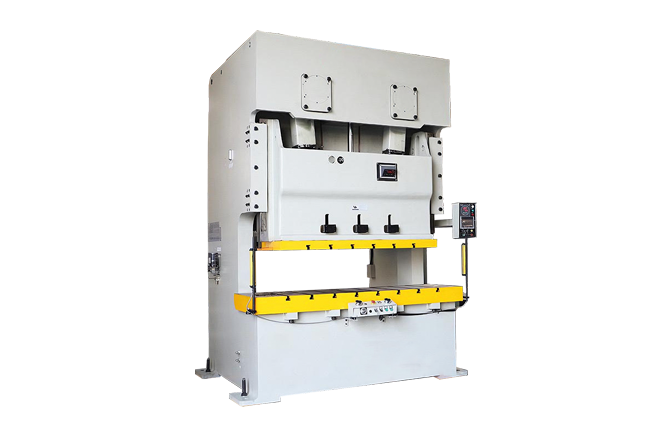
Alt Text: Comparison of pneumatic press and hydraulic press machine structure.
Feature | Pneumatic Press | Hydraulic Press | Mechanical Press |
Primary Power | Compressed Air | Hydraulic Oil | Motor & Flywheel |
Max Force | 1 - 25 Tons | 10 - 3000+ Tons | Fixed High Tonnage |
Cycle Speed | Very High | Moderate | Consistent/Fast |
Initial Cost | Lowest | Moderate to High | High |
Ideal Application | Small Parts Punching | Heavy Forming/Bending | Mass Stamping |
While pneumatic presses are excellent for speed, they are "beaten" by other machines in specific scenarios:
Tonnage Requirements: If your project requires over 30 tons of force, a Hydraulic Press is the only choice.
Stroke Control: If you need to stop the press mid-stroke or control the speed precisely, a pneumatic system's "all or nothing" nature is a disadvantage.
Heavy Gauges: For heavy-duty sheet metal machines, hydraulic power is necessary to pierce thick steel.
When selecting a machine for bending, professionals always refer to the 4T Rule.
The Rule: The minimum internal bend radius should be at least 4 times the material thickness (4T) to avoid cracking or structural failure.
Machine Impact: Using a pneumatic press for bending thick materials often violates this rule because it lacks the slow, steady pressure required to let the metal fibers stretch.
Cost of Pneumatic Press Machine: Generally the most affordable entry point for small shops.
Price of 200 Ton Hydraulic Press Machine: A significant investment, but necessary for heavy industrial sheet metal equipment users.
Is Sheet Metal Cheaper than CNC? Typically, for high-volume simple parts, a pneumatic or mechanical press is much more cost-effective than CNC milling.
Choose a Pneumatic Press if you need speed, low maintenance, and are working with light-gauge metals.
Choose a Hydraulic Press if you need versatility, high tonnage, and deep forming capabilities.
Choose a Mechanical Press for extremely high-volume, repetitive stamping.
At ListenCNC, we specialize in high-performance Pneumatic and Hydraulic solutions.
[Contact our engineers today for a custom quote] or browse our full range of Sheet Metal Working Machines.
Curious about the specific tools used by pros? Check out our guide on What machines do sheet metal workers use?