When it comes to equipping your metal fabrication workshop with a plate bending machine, one of the most critical decisions you'll face is choosing between a manual 3 roller bending machine and a fully automated CNC system. This isn't just about upfront cost—it's about long-term productivity, operational efficiency, and return on investment (ROI).
For workshop managers and business owners, understanding this distinction can mean the difference between a machine that becomes a profitable asset and one that becomes an underutilized expense.
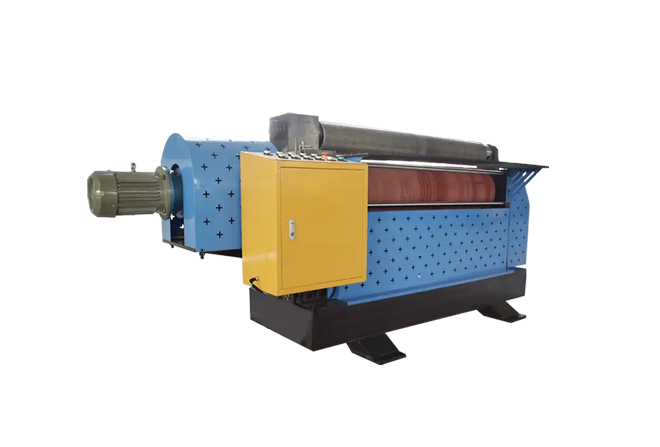
The manual 3 roller rolling machine represents the traditional workhorse of metal fabrication. It combines manual adjustment (typically for setup and fine-tuning) with mechanized rolling action. Operators control the bending process through handwheels, levers, or crank systems, relying on skill and experience to achieve the desired curvature.
Key Characteristics:
Operator-Dependent Precision: Accuracy depends heavily on operator skill
Lower Initial Investment: Typically 30-50% less expensive than CNC equivalents
Simpler Maintenance: Mechanical systems with fewer electronic components
Flexible Setup: Quick changeovers between different jobs
The three roll bending machine with CNC control represents the high-tech approach. Computer numerical control automates the bending process completely, from material positioning to final curvature. Operators program parameters once, and the machine replicates them with perfect consistency.
Key Characteristics:
Computer-Controlled Precision: Micron-level accuracy, repeatable indefinitely
Higher Throughput: Faster cycle times, especially for batch production
Reduced Labor Skill Requirements: Programming replaces hands-on expertise
Advanced Capabilities: Complex shapes, variable radii, and integrated calculations
Cost Factor | Manual 3 Roller Bending Machine | CNC Bending Machine |
Purchase Price | $15,000 - $40,000 | $50,000 - $150,000+ |
Installation | Minimal (basic electrical) | Significant (power, foundation, air) |
Training | 1-2 days for basic operation | 1-2 weeks for programming/maintenance |
Annual Maintenance | $500 - $2,000 | $3,000 - $8,000 |
Typical Lifespan | 15-20 years | 10-15 years (electronics may need updating) |
Key Insight: The 3 roller plate bending machine price for manual units is substantially lower, but this represents only part of the financial picture. The true comparison requires analyzing operational costs and revenue generation.
Performance Metric | Manual Machine | CNC Machine |
Setup Time | 15-30 minutes | 5-10 minutes (after programming) |
Cycle Time | Slower (operator-dependent) | Faster (machine-optimized) |
Batch Production | Less efficient | Highly efficient |
Complex Shapes | Limited capability | Excellent capability |
Material Waste | Higher (trial and error) | Lower (calculated approach) |
Case Study Example: A fabrication shop producing 50 curved panels daily would complete this in approximately 6 hours with a skilled manual operator versus 3.5 hours with a CNC machine. This 42% time saving translates directly to increased capacity or reduced labor costs.
Labor Consideration | Manual Machine | CNC Machine |
Operator Skill Level | High (experienced metalworker) | Medium (technical operator) |
Training Time | Months to master | Weeks to become proficient |
Wage Differential | Higher for skilled operators | Lower for machine operators |
Staff Flexibility | Limited to trained individuals | More easily cross-trained |
Important Consideration: Skilled manual machine operators are becoming increasingly scarce and command premium wages. CNC operators, while still requiring training, are typically easier to find and retain.
For a Manual 3 Roller Machine (Example):
Machine Cost: $25,000
Additional Revenue Generated: $40,000/year
Additional Operating Costs: $5,000/year
Net Annual Profit: $35,000
Annual ROI: 140%
For a CNC Machine (Example):
Machine Cost: $80,000
Additional Revenue Generated: $100,000/year
Additional Operating Costs: $15,000/year
Net Annual Profit: $85,000
Annual ROI: 106%
Machine Type | Break-Even Point | Key Factors |
Manual 3 Roller | 6-12 months | Lower initial cost, quicker to implement |
CNC Bending | 18-36 months | Higher productivity, lower per-unit cost |
Your production volume is low to medium (1-20 similar pieces per job)
Job variety is high with frequent changeovers
Your budget is constrained (under $40,000)
You have skilled operators or plan to develop them
Your workshop space is limited (manual machines are typically more compact)
You mainly work with standard radii and simple curves
Power availability is limited (manual machines require less electrical infrastructure)
Ideal Applications: Maintenance shops, repair facilities, custom architectural metalwork, educational institutions, artisan workshops, and startups.
Your production volume is medium to high (20+ similar pieces regularly)
Consistency and precision are critical (aerospace, automotive components)
You produce complex shapes with variable radii
Labor costs are high and you want to reduce skill dependencies
You plan to expand into new markets requiring advanced capabilities
Integration with other automated systems is important
You can justify the higher initial investment with projected growth
Ideal Applications: Automotive component manufacturers, industrial equipment producers, high-volume architectural fabricators, and companies serving regulated industries.
Many successful workshops adopt a phased approach:
Phase 1: Purchase a manual three roll bending machine to establish capabilities and generate revenue. LISTEN's manual machines are designed with durability and precision that support business growth.
Phase 2: As volume increases, use the manual machine for prototyping, small batches, and special projects while investing in CNC for high-volume production.
Phase 3: Maintain both machines, using each for its optimal applications. The manual machine becomes your flexible problem-solver while the CNC handles repetitive production.
What is your current and projected monthly bending volume?
How complex are the shapes you need to produce?
What materials and thicknesses will you be working with?
What skill level does your current team possess?
What is your realistic equipment budget (including installation and training)?
How important is quick job changeover in your workflow?
Do you have customers requiring certified precision or documentation?
At LISTEN, we engineer our manual 3 roller plate bending machines to deliver maximum value for workshops in the growth phase:
Built for ROI:
Durable construction ensures 15+ years of reliable service
Precision-ground alloy steel rollers maintain accuracy over time
Simple maintenance keeps operating costs predictable
CE/ISO certification meets requirements for quality-conscious clients
Growth-Oriented Design:
Compatible with future upgrades and accessories
Consistent performance that builds your reputation
Training support to maximize operator proficiency
Global service network protecting your investment
Choosing between manual and CNC bending equipment is a significant decision that depends entirely on your specific business circumstances. While this guide provides a framework, nothing replaces expert consultation tailored to your workshop.
We Recommend:
Document your typical jobs – materials, thicknesses, quantities, tolerances
Track your current bending-related costs – labor, material waste, outsourcing expenses
Project your growth over the next 3-5 years
Contact our application engineers for a personalized analysis
Ready to analyze which bending machine delivers the best ROI for your workshop? Our team has helped over 3,000 workshops worldwide make this exact decision. Request Your Free ROI Comparison Analysis today and receive:
Customized ROI calculation for your specific situation
Machine recommendations based on your actual workflow
Financing options to optimize your investment timing
Access to customer references in similar industries
About LISTEN CNC: With over 20 years of specialization in sheet metal equipment and service to 80+ countries, we understand the challenges facing small to medium workshops. Whether you choose a manual or CNC solution, our commitment is to help you select equipment that becomes a profit center, not just a cost.