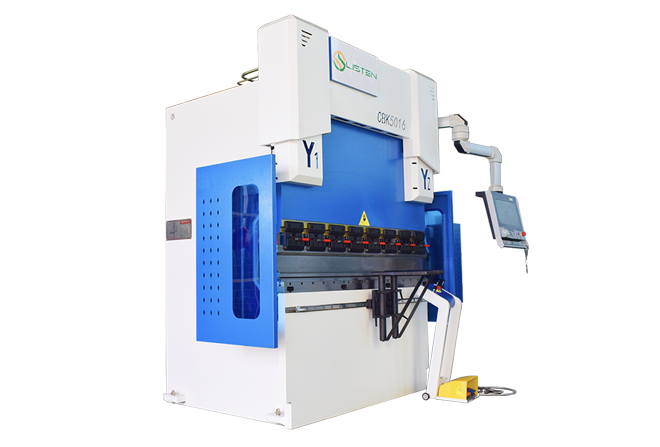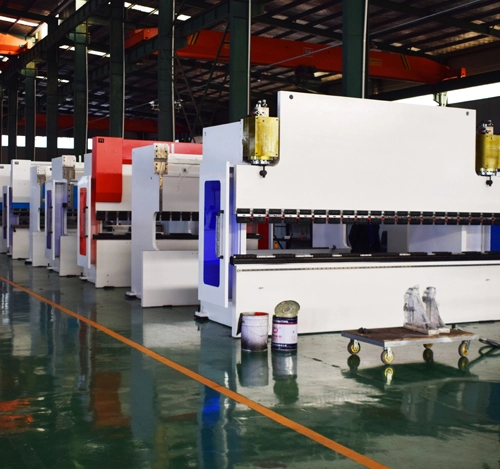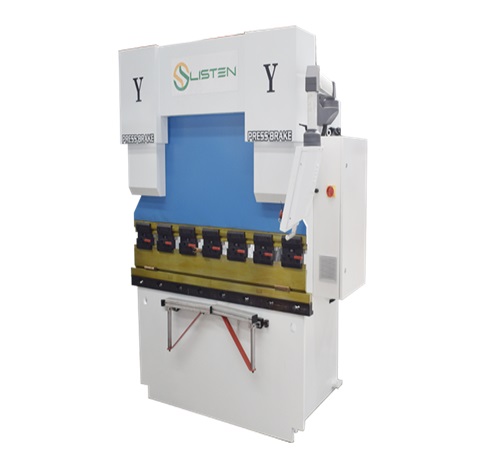
At its core, a hydraulic press brake is a machine designed to bend sheet metal, plates, and other materials into precise angles and forms. Unlike mechanical or electric alternatives, it operates using a hydraulic system—two oil cylinders that generate immense, controlled force.
Hydraulic Press Brake
Uses hydraulic cylinders to generate bending force. Offers high precision, flexibility, and is ideal for heavy-duty applications.
Mechanical Press Brake
Operates via a flywheel and clutch system. Faster but less adjustable, suited for simple, repetitive tasks.
Servo-Electric Press Brake
Powered by electric motors with servo control. Energy-efficient, quiet, and ideal for precision bending in lighter materials.
Pneumatic Press Brake
Uses compressed air for force generation. Limited tonnage, typically for thin sheets or small-scale work.
Hydraulic Power Unit: The heart of the machine, this system pumps oil into dual cylinders, creating pressure that drives the ram (upper beam) downward.
Punch and Die: The ram holds a punch (upper tool), which presses the metal into a die (lower tool), creating a bend. The angle and depth are determined by the tooling geometry and hydraulic pressure.
CNC Control System: Modern press brakes integrate Computer Numerical Control (CNC) technology, allowing operators to program bend sequences, angles, and tolerances with digital precision.
Unmatched Precision:
Hydraulic systems enable smooth, consistent force application, eliminating jerky movements. Paired with CNC automation, operators can achieve bends accurate to fractions of a millimeter—critical for industries like aerospace or medical devices.
Adaptability:
From paper-thin aluminum sheets to heavy-duty steel plates, hydraulic press brakes handle diverse materials and thicknesses. Interchangeable tooling allows for V-bends, U-bends, and complex multi-angle geometries, making them indispensable for custom projects.
Power Meets Control:
Hydraulic systems excel in high-force applications. Whether bending 10-meter steel beams or delicate copper components, the machine adjusts pressure dynamically, preventing material stress or deformation.
Safety and Durability:
Built with overload protection, emergency stops, and reinforced frames, hydraulic press brakes prioritize operator safety. Their robust construction ensures longevity, even in high-volume production environments.
Cost Efficiency:
Reduced scrap, faster setup times (thanks to CNC), and repeatable results slash production costs. For businesses, this translates to higher profitability and competitive pricing.
Automotive: Crafting chassis, brackets, and exhaust systems.
Construction: Forming structural beams, roofing panels, and HVAC ducts.
Electronics: Creating enclosures, heat sinks, and precision connectors.
Aerospace: Manufacturing lightweight, high-strength components with zero margin for error.